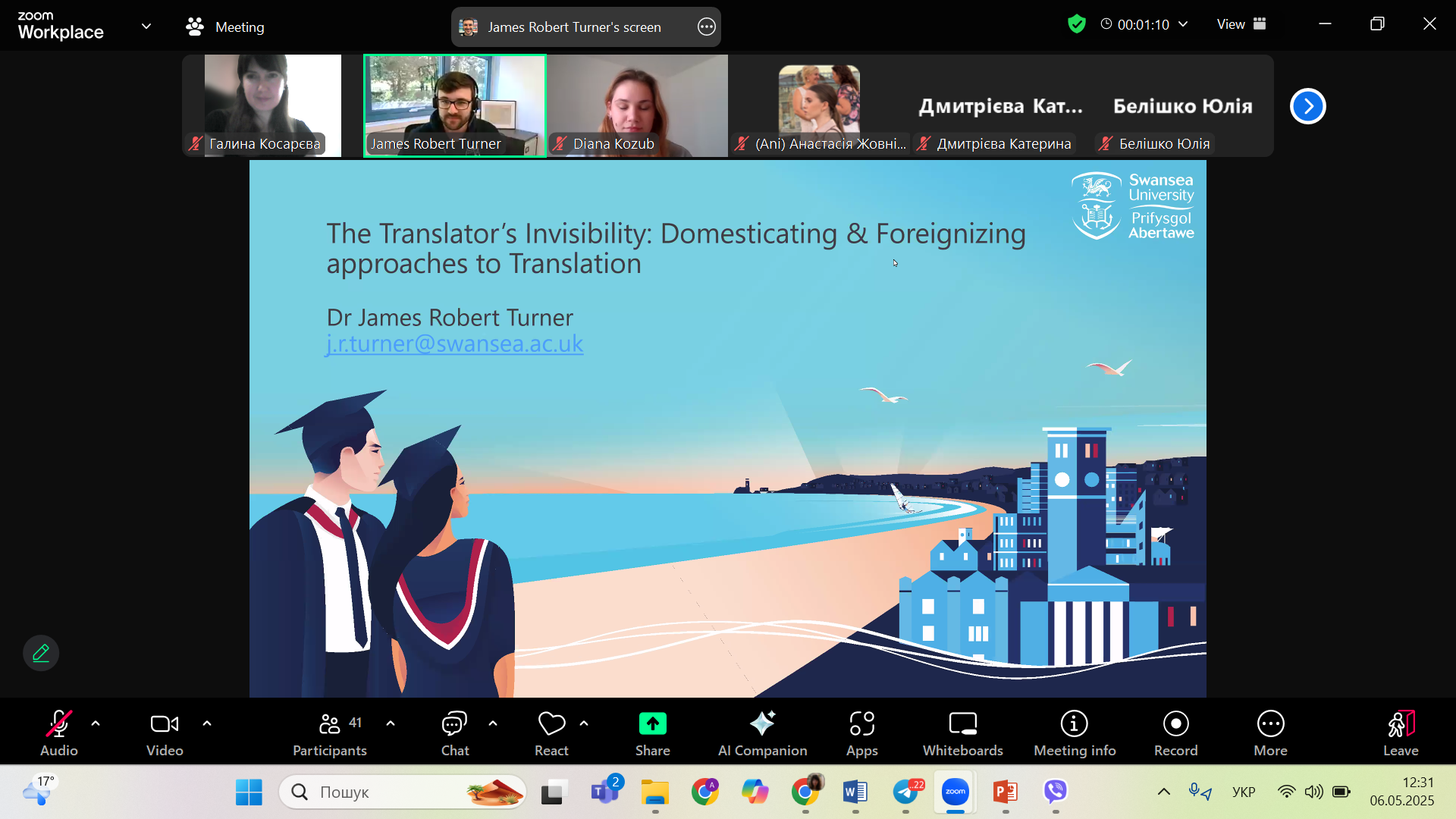
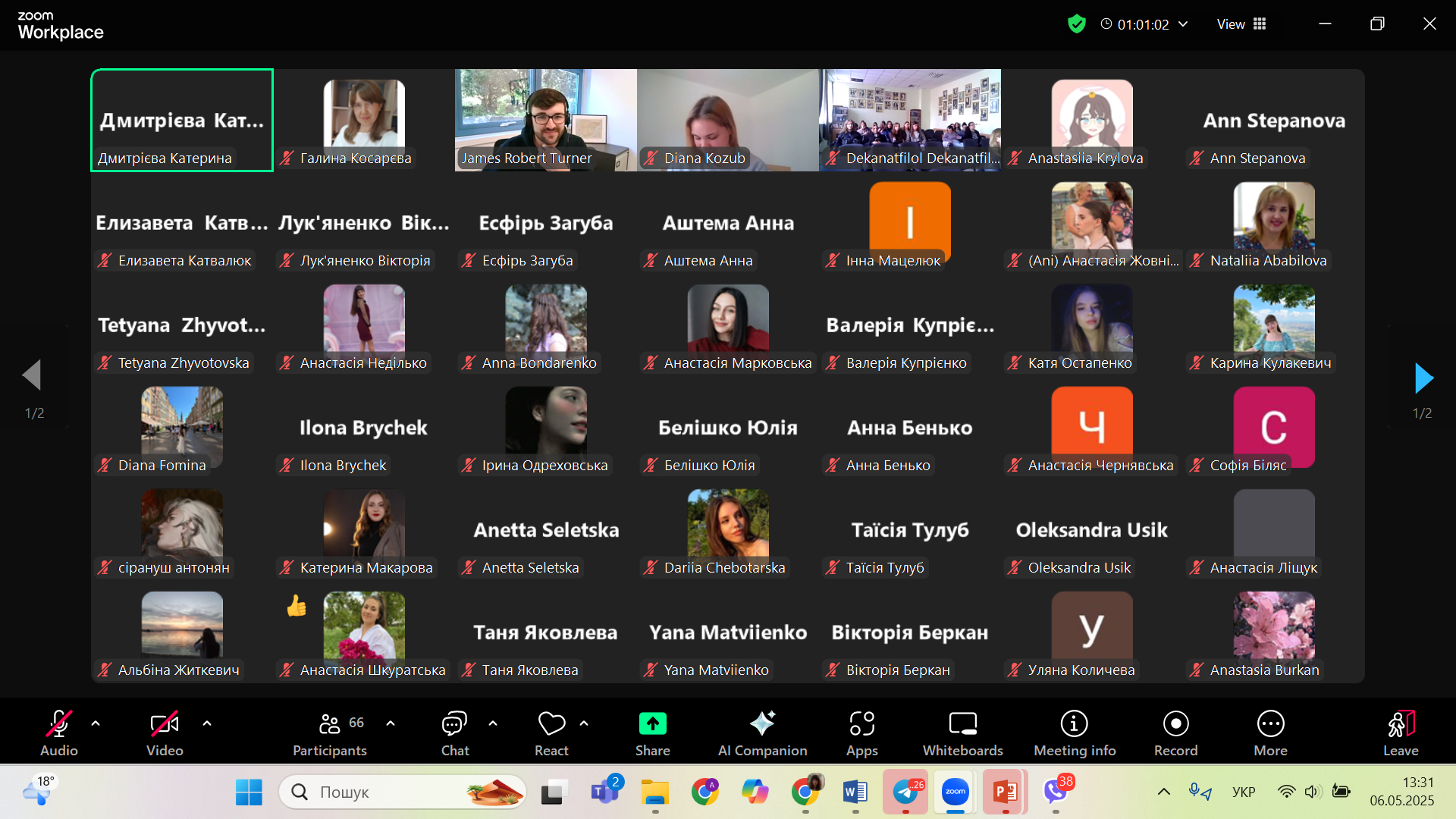
On May 6, 2025, as part of the activities of the Student Scientific Society of the Faculty of Philology, the EU Erasmus+ PROMENT project, as well as the Department of English Philology and Translation of the Petro Mohyla Black Sea National University, in cooperation with Swansea University (Great Britain), a guest lecture on the topic “Domesticating vs Foreignising Approaches to Translation” was held. The event was organized on the occasion of the Days of Science in Ukraine.
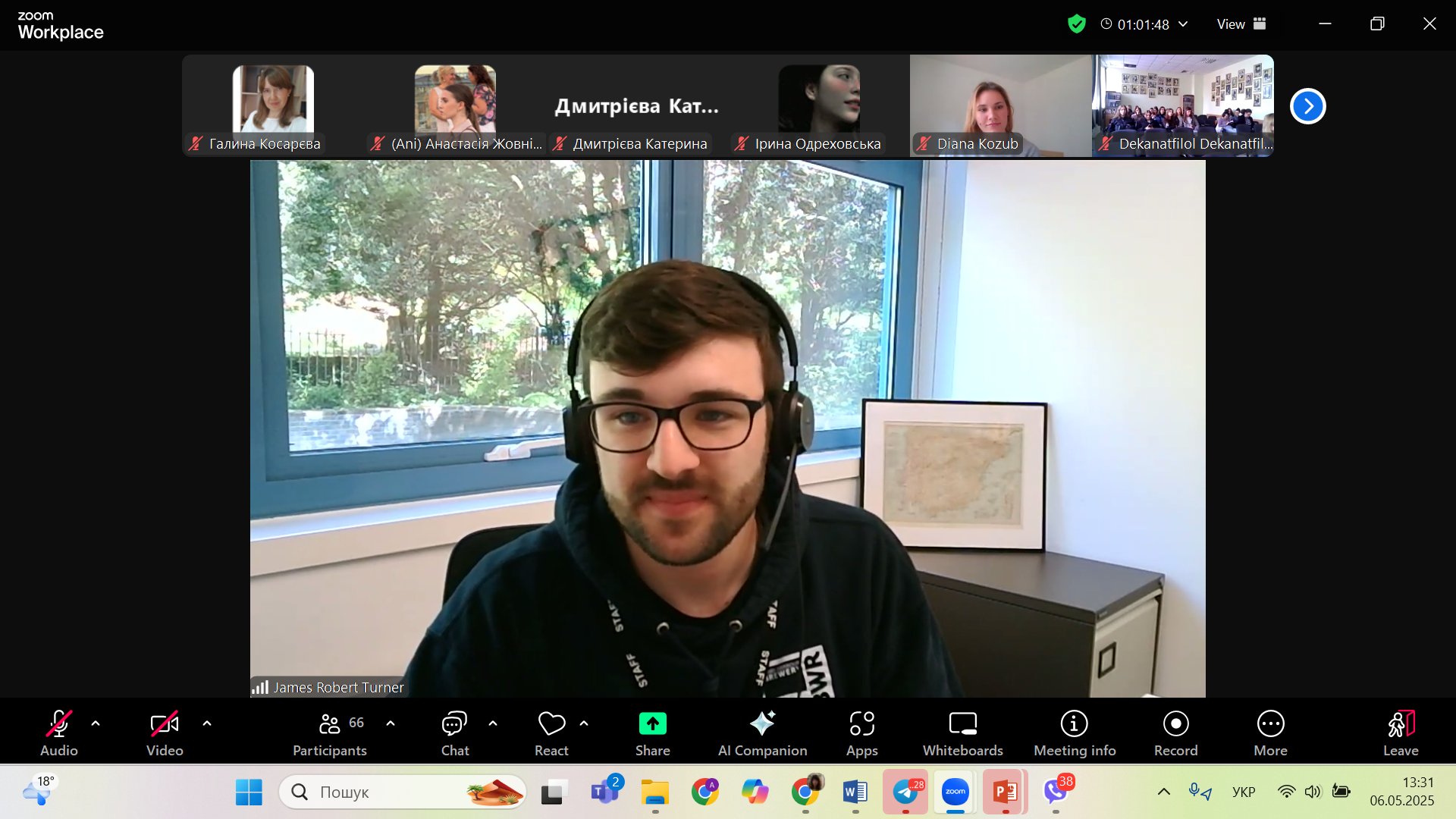
The guest speaker was James Robert Turner, Senior Lecturer in the Department of Modern Languages, Translation and Interpreting, Faculty of Culture and Communication, Swansea University. The event was held in a mixed format and gathered a large and active student audience interested in the topic of translation strategies. The meeting was moderated by Viktoria Ageeva-Karkashadze, Candidate of Philological Sciences, Head of the Department of English Philology and Translation, and a mentor of the PROMENT project.
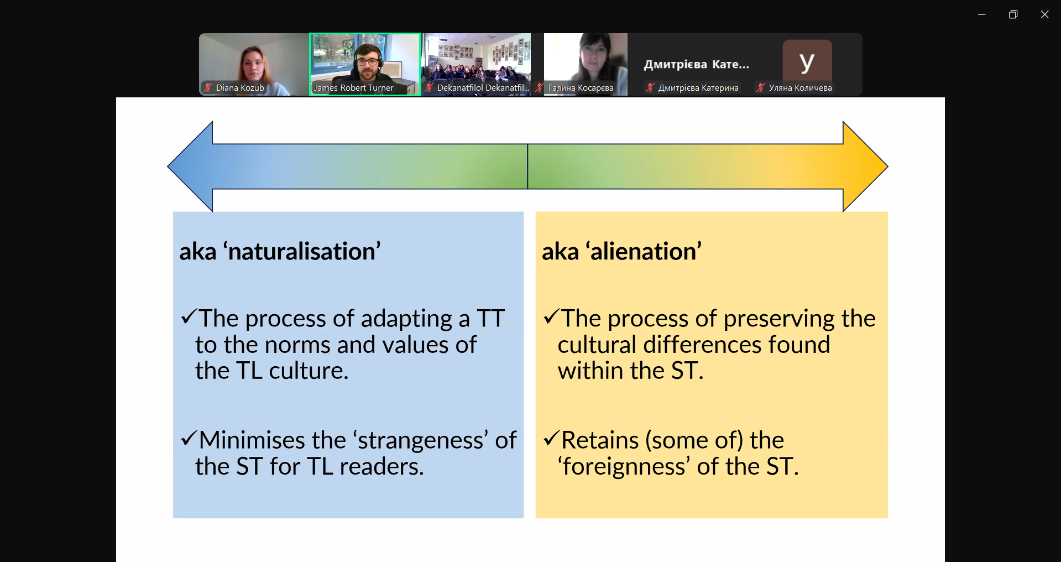
During the lecture, Mr. Turner outlined the key aspects of two leading approaches to translation – domestication and foreignization. Domestication, as the lecturer noted, involves adapting a text to the cultural norms and habits familiar to the target audience, while foreignization preserves elements of the original, not adapting, but rather emphasizing its foreign origin. Special attention was paid to how these two concepts differ and which of these two strategies is more often preferred by translators.
The meeting participants were introduced to the concept of “invisible translator”, which was proposed by Lawrence Venuti; and its pros and cons in the field of translation and book publishing.
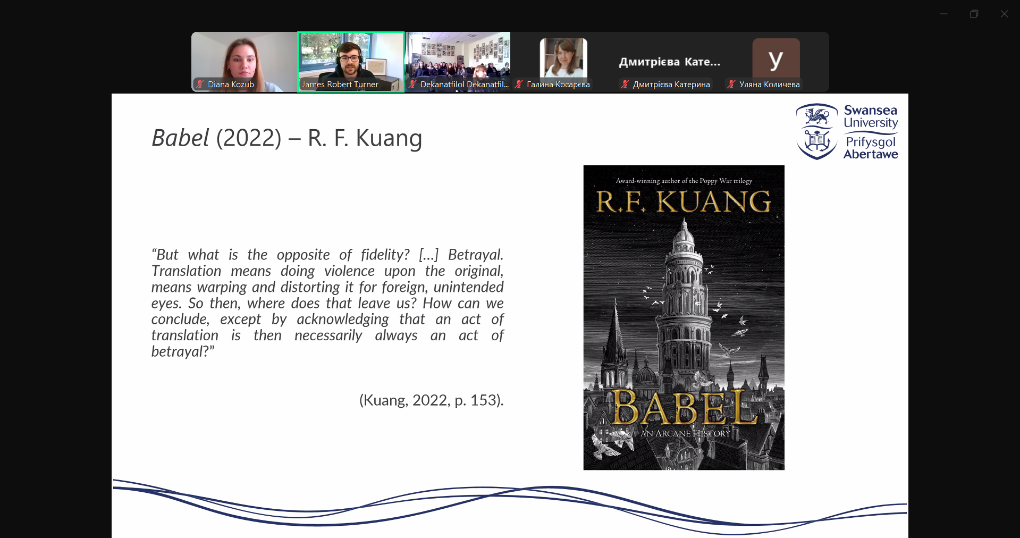
One of the memorable moments of the lecture was the citation of the novel “Babylon: The Hidden History” by Rebecca Kwan, which outlines the themes of student revolutions, colonial resistance, and the use of language and translation as a dominant tool of the British Empire.
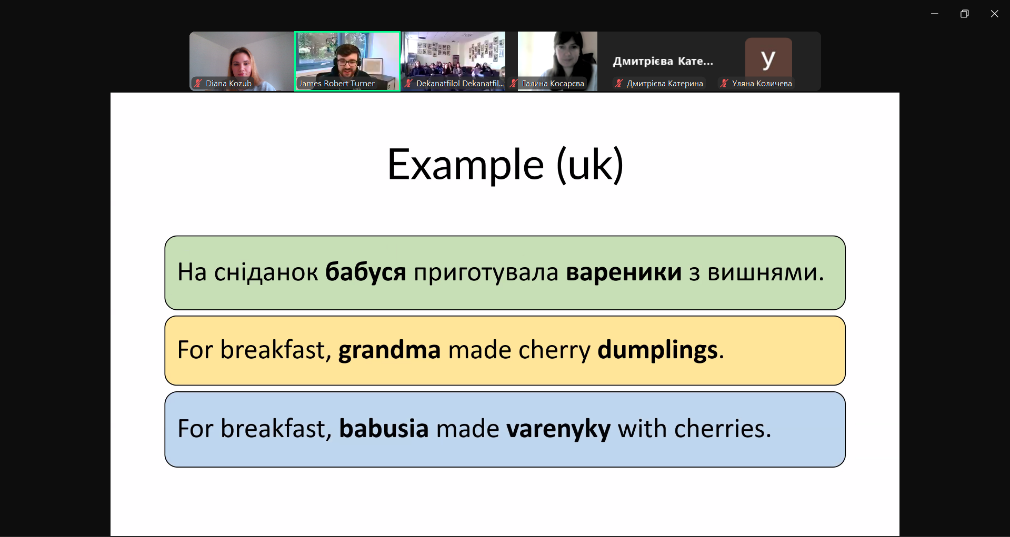
The lecture took the form of a live dialogue: students had the opportunity to actively participate in the discussion and debate about equivalence and adaptation in translation practice. A pleasant surprise from the British lecturer for the audience was an example of the translation of a popular Ukrainian dish – “varenyky with cherry” – as an illustration of cultural specificity in translation.
At the end of the meeting, the participants had the opportunity to ask the lecturer questions, which allowed not only to better understand the material, but also to establish intercultural communication. The practice of communicating in a foreign language for each of the philologists is an essential experience in the formation of professional skills.
Therefore, the event became an important event for students of the Faculty of Philology, allowing them to combine theoretical knowledge with practice and join international academic scientific cooperation.
Professor James expressed his gratitude to all the students who joined the meeting. He was impressed by the involvement of each of us. We sincerely thank lecturer James Turner and all the participants of the event for their active interaction and look forward to further joint initiatives with Swansea University!